10 Aug 2026 · Roadworthy
Will AI replace teachers by 2030? What UK schools expect
Will AI replace teachers by 2030? We examine technological shifts, classroom realities, and what automation means for UK educators.
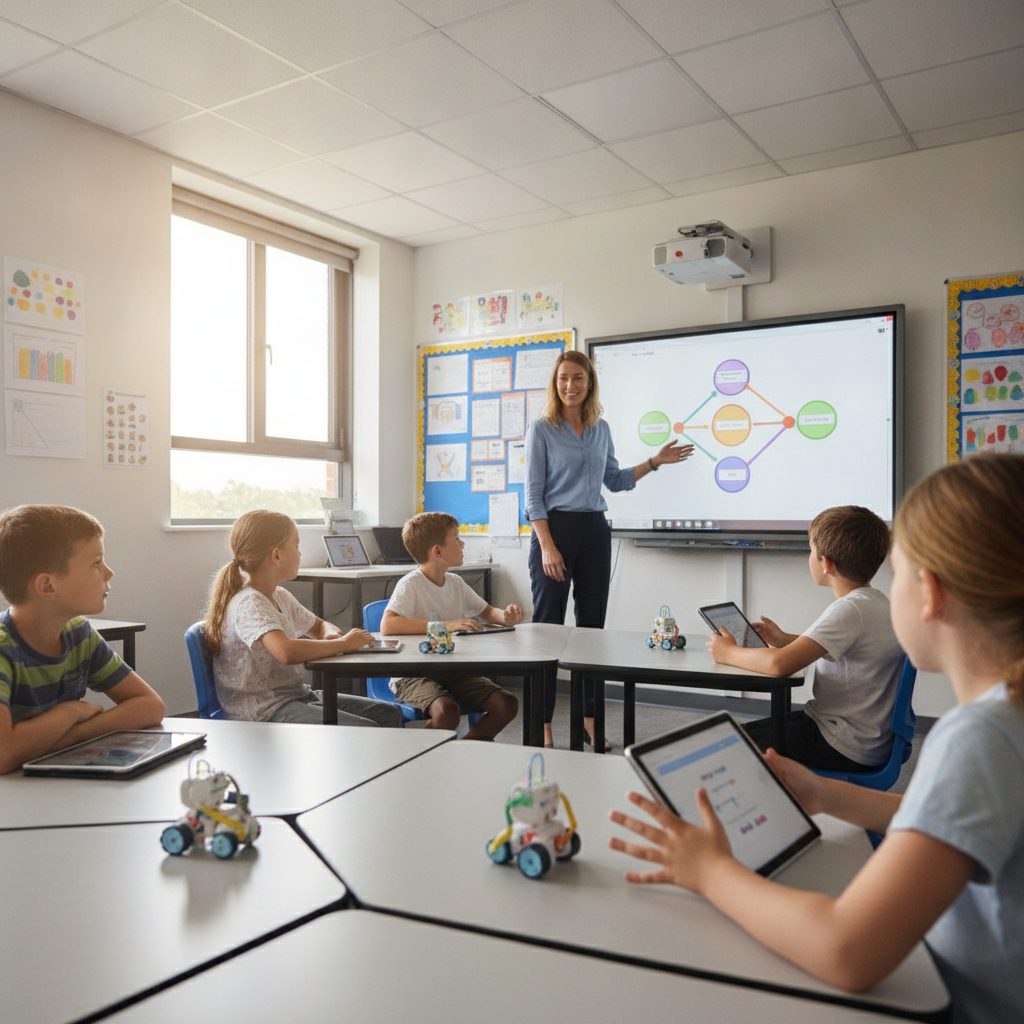
The current state of AI in UK education
Schools across England, Scotland, Wales, and Northern Ireland are actively testing software designed to handle marking, lesson plan generation, and administrative recording. Generative text models can generate a complete 45 minute history lesson scheme of work in under two minutes. Multiple choice quizzes and basic essay structures can be assessed automatically, giving pupils instant feedback on factual accuracy.
Educational technology companies claim these tools reduce weekly teacher workloads by 5 to 10 hours. However, headteachers and local authority leaders view these tools as assistants rather than substitutes for qualified staff. While algorithms process text quickly, they lack understanding of classroom dynamics, pupil background, and physical safety.
Administrative tasks AI can automate today
Teacher burnout remains a major reason for staff departures in the UK sector. Recent workload surveys indicate secondary school teachers work an average of 48 to 55 hours per week during term time, with almost half that time spent on non-teaching duties. Automating routine paperwork is where artificial intelligence offers genuine utility.
Software applications now excel at several routine tasks:
- Drafting differentiated reading materials tailored to specific reading ages.
- Converting national curriculum requirements into structured weekly lesson outlines.
- Generating report card comments based on input scores and observational tags.
- Creating practice examination questions alongside corresponding mark schemes.
- Translating learning materials into multiple languages for pupils with English as an additional language.
By delegating these repetitive duties to digital tools, educators recover precious time. This allows them to focus on direct interactions with pupils, target individual learning gaps, and address behavioral issues during lesson time.
Essential human skills AI cannot replicate
Learning is fundamentally a social and emotional process. Algorithms process data and generate outputs based on probabilities, but they do not possess empathy, moral judgement, or physical intuition. A screen cannot notice a subtle shift in a child's demeanor that signals home distress or quiet confusion.
Pastoral care represents a significant portion of an educator's daily responsibility. UK teachers undergo rigorous safeguarding training to spot signs of abuse, neglect, and mental health struggles. Identifying these subtle indicators requires emotional awareness and interpersonal trust that automated systems cannot construct.
Classroom management also requires real-time human authority. Managing twenty-five to thirty adolescents in a physical space involves non-verbal communication, body language, and dynamic decision-making. An algorithm cannot diffuse tension between two pupils, enforce physical boundary safety, or adapt a lesson instantly when energy levels drop.
How the teacher's role will evolve by 2030
By the time 2030 arrives, the primary responsibilities of teachers will have shifted from content delivery to learning facilitation and pastoral guidance. Knowledge acquisition no longer relies on a teacher standing at a whiteboard lecturing for an hour. Digital platforms can deliver tailored information to pupils at their own pace.
The classroom of 2030 will rely heavily on a hybrid approach. Pupils may work with intelligent tutoring systems for core skill drills in mathematics or grammar, while the teacher moves around the room conducting small group interventions. Instead of marking thirty exercise books every evening, teachers will review summary dashboards produced by software, identifying exactly which pupils missed a specific concept.
This shift changes the required skill set for future educators. Training providers will focus less on lecture preparation and more on data analysis, group psychology, and specialized learning support.
Comparing AI capability with human educators
To understand why total replacement is improbable by 2030, it helps to compare how automated platforms and human teachers handle core educational duties.
| Educational Responsibility | AI Platform Capabilities | Human Educator Necessity |
|---|---|---|
| Lesson Material Creation | Generates tailored texts and worksheets instantly. | Ensures content aligns with local context and pupil maturity. |
| Factual Assessment | Marks objective tests and identifies structural errors in real time. | Evaluates nuanced argument, originality, and creative expression. |
| Pastoral Safeguarding | Flags specific key phrases in written digital submissions. | Observes emotional changes, physical cues, and behavioral shifts. |
| Classroom Discipline | Schedules automated reminders and logs missed deadlines. | Establishes personal authority, manages group dynamics, and resolves conflict. |
| Practical Skill Coaching | Provides text or video step-by-step instructions. | Offers physical correction, safety intervention, and real-time adjustment. |
Specialised instruction and practical learning
Academic theory is only one side of education. Practical, real-world instruction requires direct human supervision and dynamic intervention that static software cannot deliver. Consider field-based learning, vocational trades, or physical instruction where safety and immediate spatial feedback are critical.
In practical settings, such as learning to drive, continuous physical presence is irreplaceable. Pupils preparing for tests with instructors in locations ranging from Willenhall to Fort William rely on dual-control intervention and immediate human feedback to manage risk on real roads. Software cannot grab a steering wheel, read subtle road user body language, or calm an anxious learner in heavy traffic.
Modern web applications like Rwapp show how digital platforms excel at organizing schedules, tracking progress, and streamlining business workflows without replacing the core human instructor. Technology optimizes the administrative background so the specialist instructor can focus entirely on real-time practical teaching.
The verdict: replacement or augmentation?
Will AI replace teachers by 2030? The definitive answer is no. Complete replacement by 2030 is neither technically feasible nor socially desirable. Educational policy across the UK remains firmly rooted in school-based learning communities that prioritize social development alongside academic attainment.
What will happen by 2030 is a substantial transformation of the job description. The administrative load that currently fuels teacher retention crises will shrink significantly. Teachers will spend less time writing lesson plans from scratch and grading spelling tests, freeing up hours for direct pupil engagement, targeted mentoring, and complex problem-solving.
Schools that embrace intelligent tools will likely see improved pupil outcomes and higher teacher job satisfaction. However, the human connection at the heart of learning ensures that qualified educators will remain central to classrooms throughout the decade and beyond.
Run your whole driving school from your phone.
Get early access