8 Aug 2026 · Roadworthy
Who is responsible if a learner driver crashes?
Find out who is responsible if a learner driver crashes in the UK. Learn how insurance, legal liability, and supervisor duties work.
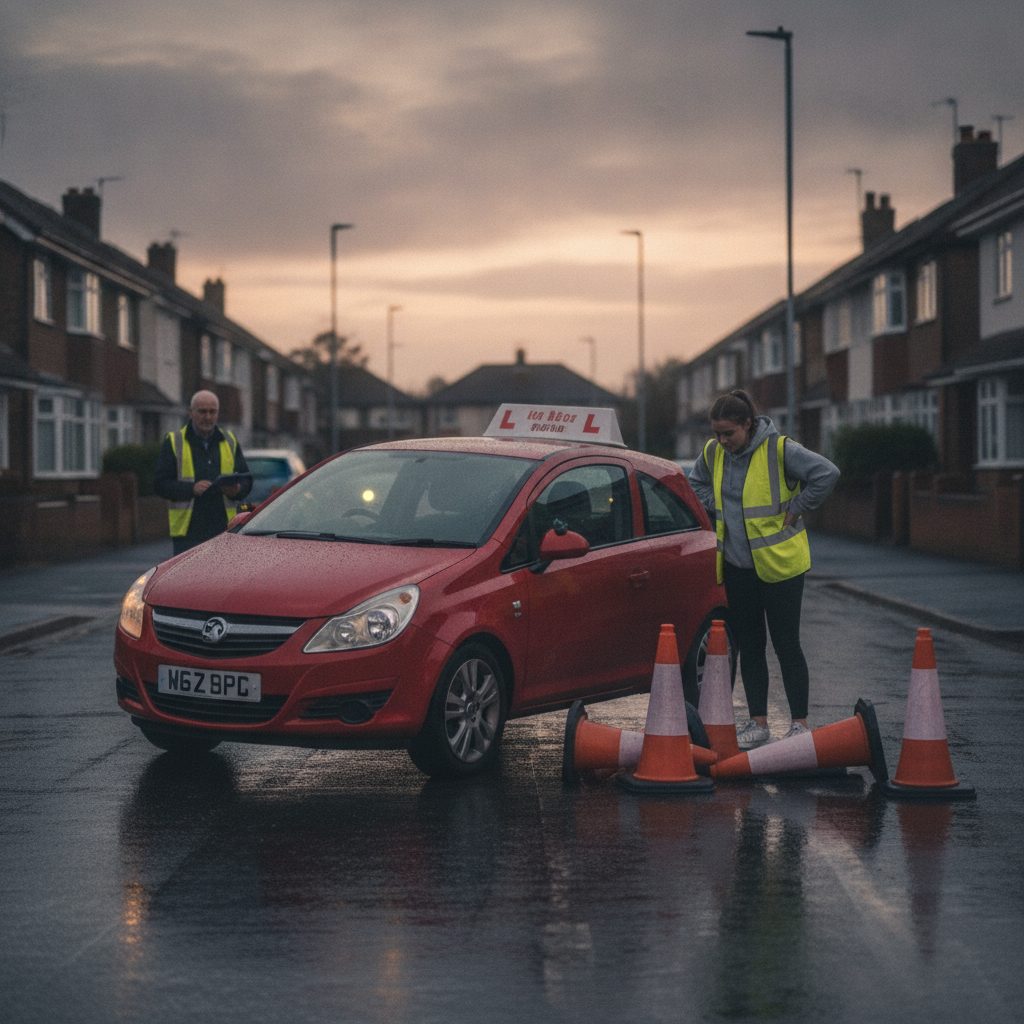
The legal standard of care for learner drivers
A common misconception among beginner motorists is that holding a provisional licence grants leniency if an accident happens. UK civil law takes a strict position on this matter. The landmark legal precedent established in the 1971 court case Nettleship v Weston confirmed that every driver on the road owes the same duty of care to other road users, regardless of their experience level.
This means a learner attempting their very first lesson on a public highway is judged against the standard of an ordinarily competent, qualified driver. If a learner turns across oncoming traffic or fails to brake in time and damages another vehicle, the law treats the learner as civilly negligent. In civil compensation claims, the learner driver is primarily liable for the damage caused by their driving.
However, practical liability involves who actually pays for the financial losses and who receives criminal penalties. This depends on whether the incident occurred in an approved driving instructor car or during private practice with a friend or relative.
Crashes during professional lessons with an instructor
When you take driving lessons with an Approved Driving Instructor (ADI), the financial responsibility for vehicle damage almost always sits with the instructor or their commercial insurer. Professional instructors carry specialized dual-control car insurance designed to cover provisional drivers against third-party damage and personal injury claims.
In almost all cases, the learner will not have to pay for repairs to the tuition vehicle or third-party cars following a crash during a paid lesson. Reputable instructors cover the insurance excess themselves, though you should check the terms agreed upon when booking lessons.
If you are using digital tools to track your driving progress or book sessions, services such as Rwapp help keep your lesson schedules and learning milestones clear, but your physical safety and legal cover rely on your instructor having valid commercial cover.
Criminal vs civil responsibility with an instructor
While the instructor's insurance policy manages the financial cost of damage, criminal liability remains attached to the person behind the wheel. If a learner breaks the law by running a red light, speeding, or driving carelessly, police can issue penalty points or fines directly to the learner driver.
An instructor can only be held criminally responsible if they actively encouraged an illegal manoeuvre or failed to intervene using dual controls when they clearly had enough time and opportunity to prevent a dangerous situation.
Crashes during private practice in a personal car
Private practice in a family car or a vehicle owned by the learner carries direct financial risks for both the driver and the supervisor. Before turning the key, appropriate provisional driver insurance must be in place.
There are two main ways to insure a learner driver for private practice:
- Adding the learner as a named driver to the owner's policy: If the learner causes a crash, the car owner must claim through their primary insurance policy. This typically results in loss of the owner's No Claims Bonus and requires paying an excess, which often ranges from £250 to £750 depending on the policy details.
- Taking out a standalone provisional insurance policy: Short-term or annual learner policies cover the provisional driver specifically. If a crash occurs, the claim is processed through the learner's standalone policy, protecting the main vehicle owner's No Claims Bonus.
If a learner drives a private car without valid insurance, both the learner and the supervising passenger face severe penalties. The learner can receive 6 to 8 penalty points and an unlimited fine, while the supervisor can be fined and given points for permitting uninsured driving.
When can a supervising passenger be held liable?
Supervising a learner driver is not a passive activity. The law regards the supervisor as being in control of the vehicle from a regulatory perspective, even though they are sitting in the passenger seat.
To legally supervise a provisional driver in the UK, the passenger must meet specific legal criteria:
- Be at least 21 years old (some insurance policies require supervisors to be 25 to 30 years old).
- Hold a full UK or EU driving licence for the category of vehicle being driven for at least three years.
- Ensure the vehicle displays correct L plates (or D plates in Wales) on the front and rear.
- Ensure the vehicle is roadworthy, taxed, has a valid MOT, and is properly insured for learner use.
Legal infractions by the supervisor
A supervising driver can be prosecuted if they breach their statutory duties during a lesson. A supervisor cannot use a hand-held mobile phone while overseeing a learner, nor can they be over the legal drink or drug limits.
If a crash occurs because the supervisor was distracted by a mobile phone, asleep, or intoxicated, police can charge both the learner (for negligent driving) and the supervisor (for failing to supervise properly or being unfit to supervise). In severe incidents, supervisors face fines, points on their own licence, or driving bans.
How accidents affect provisional licence points and future insurance
Accidents that involve motoring offences (such as driving without due care and attention) can result in endorsement points applied to a provisional licence. Endorsement points remain active on a driving record for 4 to 11 years, depending on the severity of the offence.
Receiving points as a learner carries long-term consequences under the Road Traffic (New Drivers) Act 1998:
- Points carry over: Any points earned on a provisional licence automatically transfer to your full licence once you pass the practical test.
- The six-point threshold: If a new driver accumulates 6 or more penalty points within two years of passing their practical test, their full licence is automatically revoked by the DVLA.
- Pre-existing points risk: If you accrue 6 points on your provisional licence, your licence is not immediately revoked while you remain a learner. However, the moment you pass your practical test, you reach the 6-point limit as a new driver, causing your new full licence to be revoked instantly.
Careful driving and structured instruction are essential. Learners and instructors who monitor driving history and training progress through Rwapp can identify skill gaps early, reducing the likelihood of incidents caused by poor control or poor hazard perception.
Comparing crash scenarios and financial consequences
The financial impact of a crash depends on the setup of the lesson and the insurance product chosen for the session. The table below illustrates who typically pays for damage across common situations.
| Scenario | Primary Financial Responsibility | Impact on Main Owner's No Claims Bonus | Who Pays Insurance Excess? |
|---|---|---|---|
| Lesson with an Approved Driving Instructor | Instructor's commercial policy | No impact on owner or learner | Instructor |
| Private practice (Learner as named driver) | Main vehicle owner's policy | Owner loses No Claims Bonus | Policyholder / Learner |
| Private practice (Standalone learner policy) | Specialist learner insurance provider | Protected | Learner driver |
| Private practice (Uninsured learner) | Learner driver and supervisor personally | Claim denied; costs billed to driver | No cover applies |
What to do immediately after a collision
If you are involved in a collision while learning to drive, you must follow the standard procedure set out under Section 170 of the Road Traffic Act 1988. Following these steps ensures you comply with UK road traffic laws:
- Stop immediately: It is an offence to leave the scene of an accident, regardless of who was driving or who was at fault. Switch off the engine and turn on hazard warning lights.
- Check for injuries: Ensure yourself, your supervisor, and individuals in other vehicles are safe. Call 999 immediately if anyone requires urgent medical attention or if the road is blocked.
- Exchange details: Provide your name, address, provisional licence details, vehicle registration number, and insurance details to anyone with reasonable grounds to ask. Your supervisor must also provide their contact details.
- Document the scene: Take clear photographs of vehicle positions, road markings, weather conditions, and damage to all vehicles involved. Note the exact time and location.
- Report to police if necessary: If you cannot exchange details at the scene, or if damage was caused to third-party property without the owner present, you must report the crash at a police station or to a police officer within 24 hours.
- Notify the insurer: Inform the relevant insurance provider as soon as possible. Even if you do not intend to make a claim for damage to your own vehicle, failing to report an accident can invalidate your policy.
Run your whole driving school from your phone.
Get early access