16 Jul 2026 · Roadworthy
What is the number 1 reason for failing a driving test?
Discover the number 1 reason for failing a driving test in the UK. Learn how to avoid this common junction mistake and pass your practical test first time.
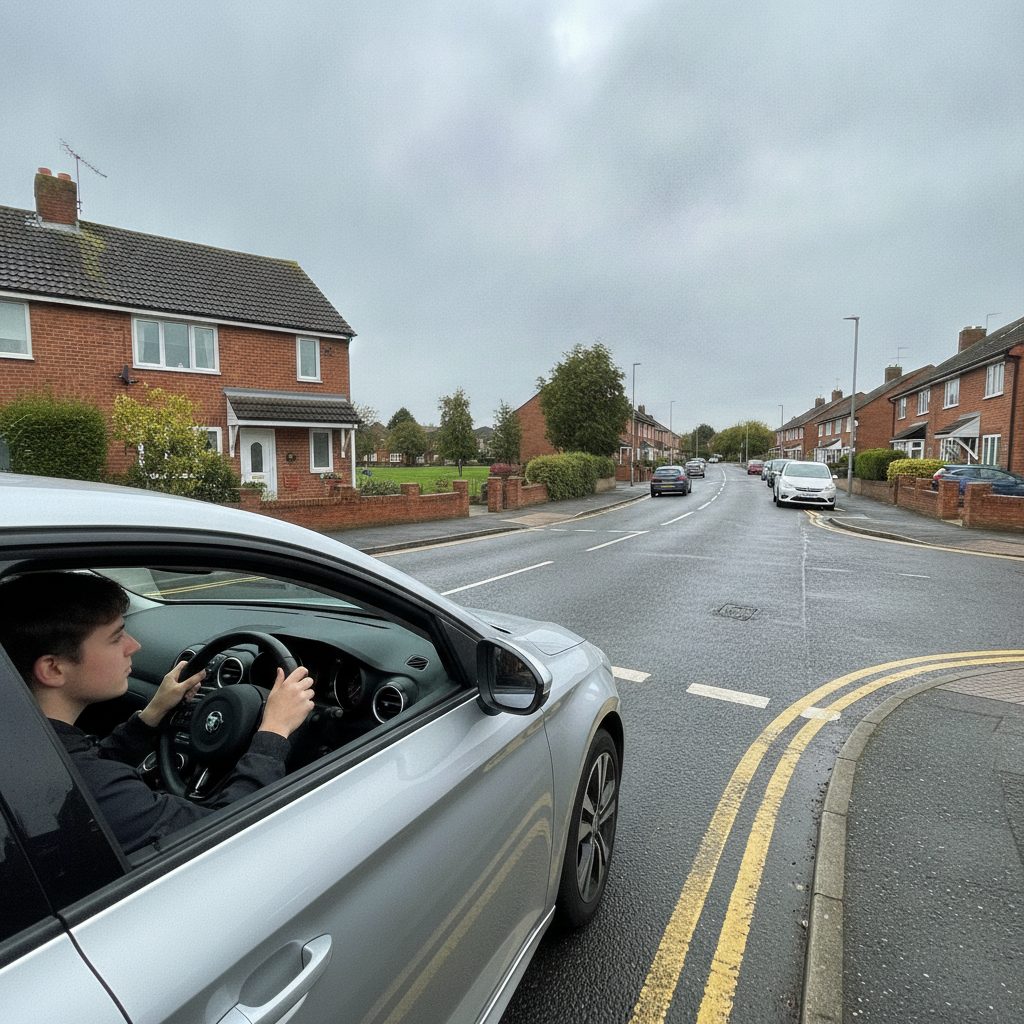
The number one reason: Junctions (observation)
Year after year, the Driver and Vehicle Standards Agency publishes statistics detailing why candidates fail their practical driving tests. The undisputed leader at the top of this list is poor observation at junctions. This single category accounts for tens of thousands of failed tests across England, Scotland, and Wales every year.
During your practical test, the examiner assesses how you handle various intersections. Failing to look properly when emerging from a minor road onto a major road is classified as a serious or dangerous fault. In the UK driving test system, committing just one serious or dangerous fault results in an automatic fail. You can accumulate up to 15 driving faults, often called minors, but a single lapse in junction observation ends your hopes of passing that day.
This error is not just about a quick glance. Examiners want to see active, effective observation. They need to see that you have processed the speed and distance of oncoming vehicles before you decide to pull out. Simply turning your head is not enough if you still proceed to pull out into the path of an oncoming vehicle, forcing them to brake or alter their course.
Why learners struggle with junction observations
Many learner drivers do not fail because they do not know they need to look. They fail because they perform the observation incorrectly under pressure. One common scenario involves pulling out at T-junctions. When a driver is nervous, they may experience a form of tunnel vision. They focus entirely on the space immediately in front of them rather than scanning the wider environment.
Another major issue is misjudging the speed of oncoming traffic. This happens frequently on faster roads where vehicles travel at 40 to 60 miles per hour. A learner might look both ways, see a car, and mistakenly believe they have enough time to clear the junction. If the oncoming vehicle has to slow down, even slightly, the examiner will mark this as a serious fault for junction observation.
Blind spots also play a massive role. Modern cars often have thick front pillars, known as A-pillars, which can easily hide a cyclist or a motorcyclist. If you do not actively lean forward or move your head to look around these pillars, you can easily pull out directly in front of a vulnerable road user. This is a critical mistake that examiners are trained to spot instantly.
The top 10 reasons for UK driving test failures
While junction observation remains the primary cause of failure, several other recurring issues catch out candidates. The DVSA regularly compiles these statistics to help instructors and learners focus their preparation. The table below outlines the ten most common areas where test candidates pick up serious or dangerous faults.
| Rank | Fault Category | Typical Mistake Made by Candidates |
|---|---|---|
| 1 | Junctions (observation) | Pulling out when a vehicle or cyclist is approaching. |
| 2 | Mirrors (change of direction) | Failing to check rear and side mirrors before steering. |
| 3 | Control (steering) | Letting the steering wheel slide back or losing path control. |
| 4 | Junctions (turning right) | Positioning the car incorrectly or cutting the corner. |
| 5 | Move off (safely) | Failing to check the physical blind spot before moving. |
| 6 | Response to signals (traffic lights) | Failing to stop at red lights or waiting at green lights. |
| 7 | Move off (control) | Stalling repeatedly in dangerous situations or rolling back. |
| 8 | Positioning (normal driving) | Driving too close to the kerb or straddling lanes. | Response to signals (road markings) | Ignoring stop lines, bus lane markings, or painted arrows. |
| 10 | Reverse park (control) | Inability to park accurately or hitting the kerb heavily. |
Mirrors and moving off: The runner-up mistakes
Close behind junction mistakes is the failure to use mirrors effectively when changing direction. Many learners check their mirrors when driving in a straight line but fail to do so before they turn or change lanes. The driving test requires you to show a clear routine: Mirror, Signal, Manoeuvre. If you signal before checking your mirrors, or if you steer without looking at all, you will likely fail.
Moving off safely is another major hurdle. During your test, the examiner will ask you to pull over on the left and move off again several times. This exercise is designed to test your observational skills and vehicle control. The most common error here is failing to check your right-hand blind spot over your shoulder before pulling away from the kerb.
If you rely solely on your mirrors when moving off, you miss the area directly alongside your car. If a cyclist or another vehicle is overtaking you at that moment, pulling out creates an immediate hazard. It is essential to perform a full six-point check, finishing with a glance over your right shoulder, every single time you move off from a stationary position.
Steering, control, and positioning errors
Vehicle control is a fundamental skill that examiners watch closely. Steering errors often occur when candidates negotiate roundabouts or sharp bends. Letting the steering wheel slip through your hands, or failing to turn the wheel enough, can cause the car to drift across lanes. This immediately puts other road users at risk.
Road positioning is also heavily scrutinised. You must keep your vehicle in the centre of your lane. Driving too close to parked cars on the left, or straddling the central white line, indicates a lack of spatial awareness. When turning right at a junction, you must position your car close to the centre line of the road without crossing it. This allows traffic behind you to pass on the left if there is room.
If you are practicing your driving in East Yorkshire, working with a specialist driving instructor can help you master these spatial skills. You can find experienced professionals in your area by visiting driving schools in Hull. They will teach you how to position your vehicle correctly on complex multi-lane roundabouts and narrow residential streets.
How to eliminate junction errors before your test
Fixing the number one cause of driving test failure requires changing how you approach every intersection. First, adopt the habit of slowing down earlier. When you approach a junction too quickly, your brain has less time to process visual information. By reducing your speed early, you give yourself the mental capacity to look, assess, and make a safe decision.
Second, implement the "peep and creep" method at closed junctions where your view is blocked by buildings, hedges, or parked cars. Put the car into first gear, bring the clutch to the bite point, and let the car edge forward by fractions of an inch. While doing this, constantly look left and right. This allows you to see around the obstruction without nose-diving your car into the path of oncoming traffic.
Finally, make your observations active rather than passive. Do not just look because your instructor told you to. Look with the specific intention of finding motorbikes, cyclists, and pedestrians. If you struggle to stay organised with your driving lessons and progress tracking, using online tools like Rwapp can help you keep your preparation structured and focused on these critical safety skills.
Why local road knowledge matters on test day
Every driving test centre has its own set of notoriously difficult junctions. Some have unusual layouts, faded road markings, or hidden signs that catch out unprepared candidates. Practicing on the actual roads around your chosen test centre is one of the most effective ways to build your confidence and avoid silly mistakes.
For example, if you are preparing for a test in Somerset, navigating the historic streets and tight junctions can be challenging. Working with local experts, such as those at driving schools in Bath, ensures you will be introduced to the specific test routes and difficult junctions that examiners favour. They can show you exactly where learners often make observation errors.
Similarly, if you are learning to drive in Greater Manchester, the busy urban routes present a different set of challenges. Booking lessons with instructors at driving schools in Sale can give you valuable experience on fast dual carriageways and complex local roundabouts. This targeted practice ensures that by the time you sit your test, you will know exactly how to handle every junction with calm, methodical observation.
Run your whole driving school from your phone.
Get early access