9 Aug 2026 · Roadworthy
Requirements to supervise a learner driver in the UK
Wondering what are the requirements to supervise a learner driver? Check age rules, licence types, insurance, and legal duties before setting off.
Legal age and licence requirements
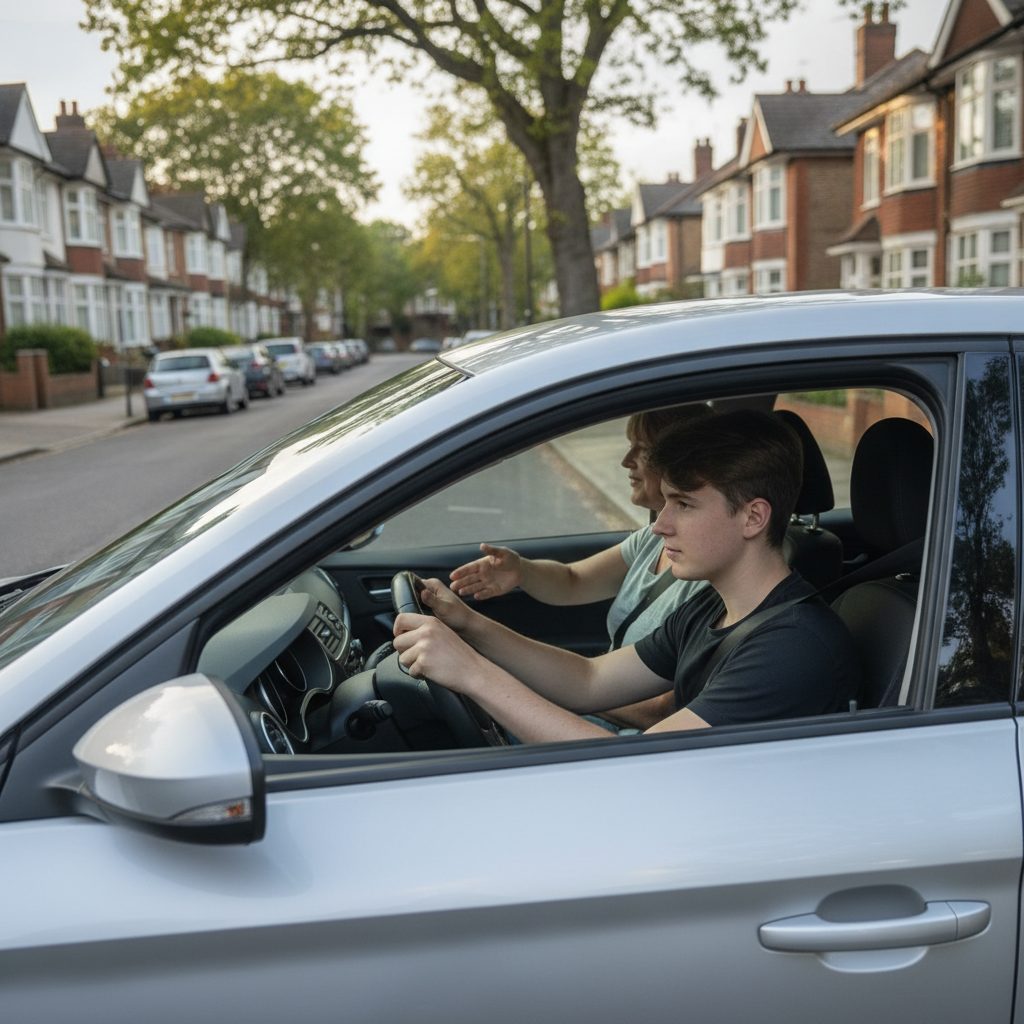
To sit in the passenger seat and supervise a learner driver on UK public roads, you must meet specific criteria set out by the Driver and Vehicle Standards Agency (DVSA). Failing to meet these standards means the learner is effectively driving unsupervised, which carries six penalty points and a fine of up to £1,000 for the learner, along with legal consequences for yourself.
First, you must be at least 21 years old. Second, you must have held a full Great Britain or European Economic Area (EEA) driving licence for a minimum of 3 consecutive years. If you received a driving ban during those 3 years, that disqualified period does not count towards your required total. You must have accrued 3 full years of active driving entitlement.
It is also your responsibility to ensure that your driving licence is valid and up to date. You must be qualified to drive the specific class of vehicle the learner is using. If you have moved house or renewed your photocard, check that your details are accurate with the DVLA before supervising a practice session.
Manual vs automatic licence conditions
The type of full licence you hold dictates which vehicles you are legally allowed to supervise. If you hold a full manual driving licence, you are permitted to supervise a learner in either a manual car or an automatic car. Because your entitlement covers both gearboxes, the law allows you to guide a learner using either transmission type.
However, if you hold an automatic-only licence, you can only supervise a learner driver in an automatic car. You cannot supervise someone practicing in a manual vehicle, even if you have held your automatic licence for 10 years or more. If a manual learner relies on an automatic licence holder for supervision, the learner is driving without a valid supervisor present.
If you are planning practice routes across regions like Fareham or Aberdare, double check the vehicle's registration document and your licence entitlement before heading out. Matching the licence type to the transmission ensures complete compliance with UK road traffic legislation.
Vehicle, L-plate, and insurance rules
The car used for private practice must be roadworthy, taxed, and covered by a valid MOT certificate if it is over 3 years old. In addition, the vehicle must display red L-plates (or D-plates in Wales) clearly on both the front and rear. These plates must be visible from a distance to other road users. When the learner is not driving, the plates must be removed or covered over so other drivers are not misled.
Insurance coverage is another essential legal requirement. The learner driver must be insured specifically for the vehicle they are driving during practice sessions. This can be achieved in one of two ways:
- Adding the learner driver to the vehicle owner's existing insurance policy as a named driver.
- Taking out a dedicated temporary learner driver insurance policy in the learner's name.
If you plan to use the learner's own car for practice, ensure that you as the supervisor are also insured to drive that vehicle. If an emergency arises and you need to take over the wheel, sitting behind the controls without valid cover is illegal.
Legal duties, alcohol limits, and mobile phone laws
When you act as a supervisor, the law views you as the person in charge of the vehicle. This means the same motoring laws that apply to drivers apply directly to you while sitting in the passenger seat. You cannot simply sit back and scroll through social media or relax after drinking alcohol.
The drink and drug driving limits apply to supervisors in full. It is illegal to supervise a learner driver if you are over the legal alcohol limit or under the influence of illegal drugs. Similarly, using a handheld mobile phone while supervising is illegal. Holding a phone to check directions, text, or make a call while supervising carries a fine of £200 and 6 penalty points on your own licence.
You must also meet the standard eyesight requirements. You must be able to read a modern-style vehicle number plate from a distance of 20 metres, wearing glasses or contact lenses if necessary. If you need corrective eyewear to drive, you must wear it throughout the supervision session.
Rules for motorway practice
Learner drivers are allowed on motorways in England, Scotland, and Wales, but only under very specific conditions. Private practice on motorways with a family member or friend is strictly forbidden by law.
A learner driver can only drive on a motorway if all of the following conditions are met:
- The vehicle is fitted with dual controls.
- The supervisor is an approved driving instructor (ADI) registered with the DVSA.
- The session takes place in a dual-controlled instructor car.
If you are supervising a learner as a family member or friend, you cannot take them onto a motorway regardless of how experienced you are. Stick to A-roads, dual carriageways, and local routes in areas like Wareham or Weston Super Mare to build their high-speed confidence legally.
Legal rules vs recommended guidelines
While the law sets minimum boundaries, standard best practice goes beyond basic legal requirements to keep both occupants safe. The table below outlines what is required by law versus what is recommended for safe private practice sessions.
| Feature | Legal Requirement | Recommended Best Practice |
|---|---|---|
| Supervisor Age | At least 21 years old | Over 25 years old for added experience |
| Licence Duration | Full licence held for 3 to 5 years minimum (3 mandatory) | Regular driving experience over recent years |
| Extra Interior Mirror | Not legally required for private cars | Fitted so supervisor can view rear traffic |
| Motorway Access | Prohibited for private supervisors | Leave motorway training to professional instructors |
| Session Duration | No legal time limit | Limit sessions to 1 to 2 hours to prevent fatigue |
Combining private practice with driving lessons
Private practice should complement professional tuition rather than replace it. DVSA research indicates that learners who combine professional instruction with around 20 hours of structured private practice are significantly more likely to pass their practical test on the first attempt.
To get the most out of private supervision, keep in regular contact with the pupil's driving instructor. Ask which specific skills the learner is working on, such as parallel parking, roundabouts, or independent navigation. Reinforcing what professional instructors teach prevents the learner from adopting outdated habits or techniques that could lead to driving test faults.
Run your whole driving school from your phone.
Get early access